
Why Trust and Betrayal Create Stronger Suspense Stories
Trust is one of the most important parts of any relationship. In psychological thrillers, that
K. M. Sorbello
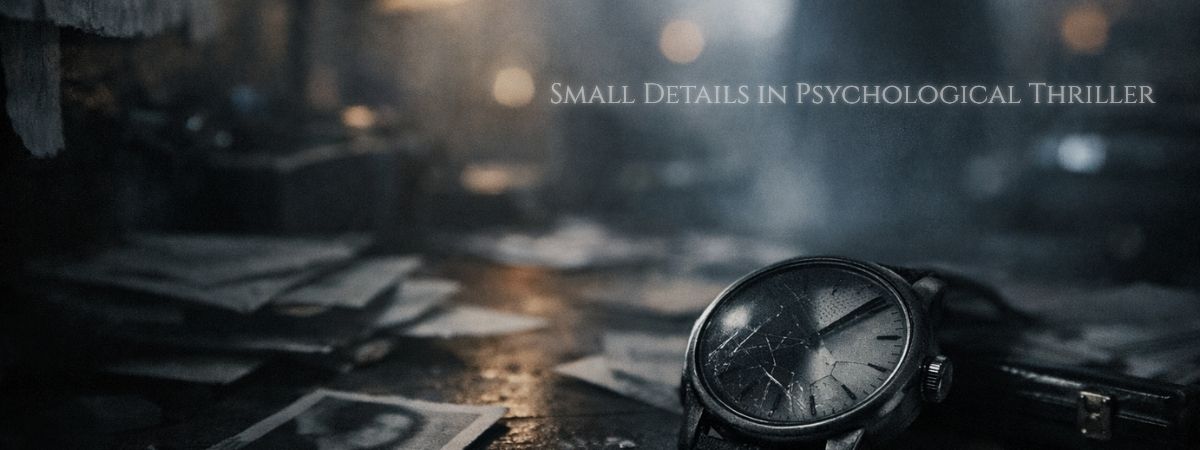
Psychological thrillers don’t depend on loud action or constant twists. Instead, they draw readers in quietly. The tension builds through small, almost unnoticeable moments. A line of dialogue, a strange reaction, or even an object sitting in the background can carry more weight than it first appears.
This is where perceptioninpsychologicalthrillers really stands out. What readers notice, ignore, or misunderstand shapes how the story unfolds for them. Often, the smallest detail ends up meaning the most.
Let’s break down why these details matter and how they make these stories so gripping.
In this genre, clues are rarely obvious. Writers prefer subtle hints that blend into the story rather than stand out.
A character may hesitate before answering a simple question. A detail might not quite match something mentioned earlier. These moments don’t seem important at first, but they stay in the back of your mind.
As the story moves forward, these hints start to connect. Readers begin to sense that something isn’t right, even if they can’t explain why. That feeling is what keeps the suspense alive.
This is one reason why readers are drawn to a strong psychological thriller book, where every small hint feels intentional and worth noticing.
Tension in psychological thrillers often comes from quiet discomfort rather than obvious danger.
Writers place small details that make a scene feel slightly off. It could be a misplaced object, an odd reaction, or a detail that doesn’t quite fit. These things don’t explain themselves, but they create questions.
For example, a situation might seem routine, but one unusual element changes how everything feels. In one moment, something as simple as a smoke-triggering device hidden among stored items causes confusion and raises suspicion. It’s not dramatic on the surface, but it suggests something intentional beneath it.
This kind of detail is often what makes a psychological thriller book feel tense without relying on obvious danger.
The most satisfying twists don’t come out of nowhere. They feel surprising, but also make sense once revealed.
That’s because they are built on small details introduced earlier in the story.
A tiny clue that seemed unimportant at first can later become the key to understanding everything. When readers look back, they realize the signs were always there.
You’ll often see this technique used in stories like The Adventures of Tommy Somebody book series by K. M. Sorbello, where small observations slowly build toward bigger reveals without feeling forced.
Background details may seem easy to overlook, but they shape how a story feels.
These include the setting, small actions, and even the tone of a scene. A quiet room can feel calm in one moment and unsettling in another, depending on the details around it.
Writers use these elements to guide emotions without directly explaining them. Instead of telling readers what to feel, they let the environment do the work.
That’s part of what makes a psychological thriller book so immersive. Readers aren’t just following events, they’re experiencing the mood through subtle cues.
In psychological thrillers, big revelations rarely come from obvious clues. They come from small observations that build over time.
A character might notice something others ignore. A reader might connect two small details that didn’t seem related before. These moments slowly lead to major discoveries.
This makes the story feel more realistic. In real life, people don’t solve problems instantly. They piece things together step by step.
It also keeps readers engaged. Instead of just following the story, they feel like they’re part of solving it, which is a key strength of any well-written psychological thriller book.
At the heart of every psychological thriller is perception. It shapes how events are understood and how characters react.
Two people can see the same situation differently. One may notice a detail that the other completely misses. This difference creates tension and often drives the story forward.
Writers use this to guide the reader’s attention. They highlight certain things while quietly hiding others. This balance keeps readers guessing until the very end.
Small details are what give psychological thrillers their depth. They build tension, hint at hidden truths, and connect everything together in meaningful ways.
What makes these stories memorable is how they reward attention. The more carefully you read, the more you discover.
In the end, it’s not just about the big twist. It’s about all the small moments that quietly shape how you see the story.
Why Trust and Betrayal Create Stronger Suspense Stories
Trust is one of the most important parts of any relationship. In psychological thrillers, that

How Unanswered Questions Drive Suspense in Psychological Thrillers
A strong psychological thriller does not reveal everything at once. Instead, it creates curiosity by

Why Unexplained Visions and Intuition Matter in Psychological Thrillers
Psychological thrillers are built on uncertainty. Readers are constantly trying to figure out what is